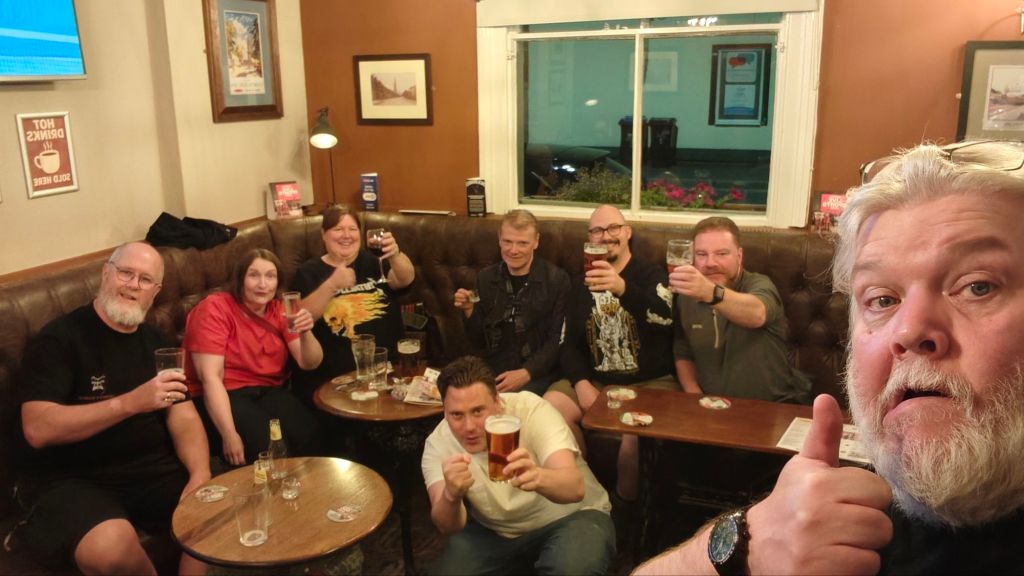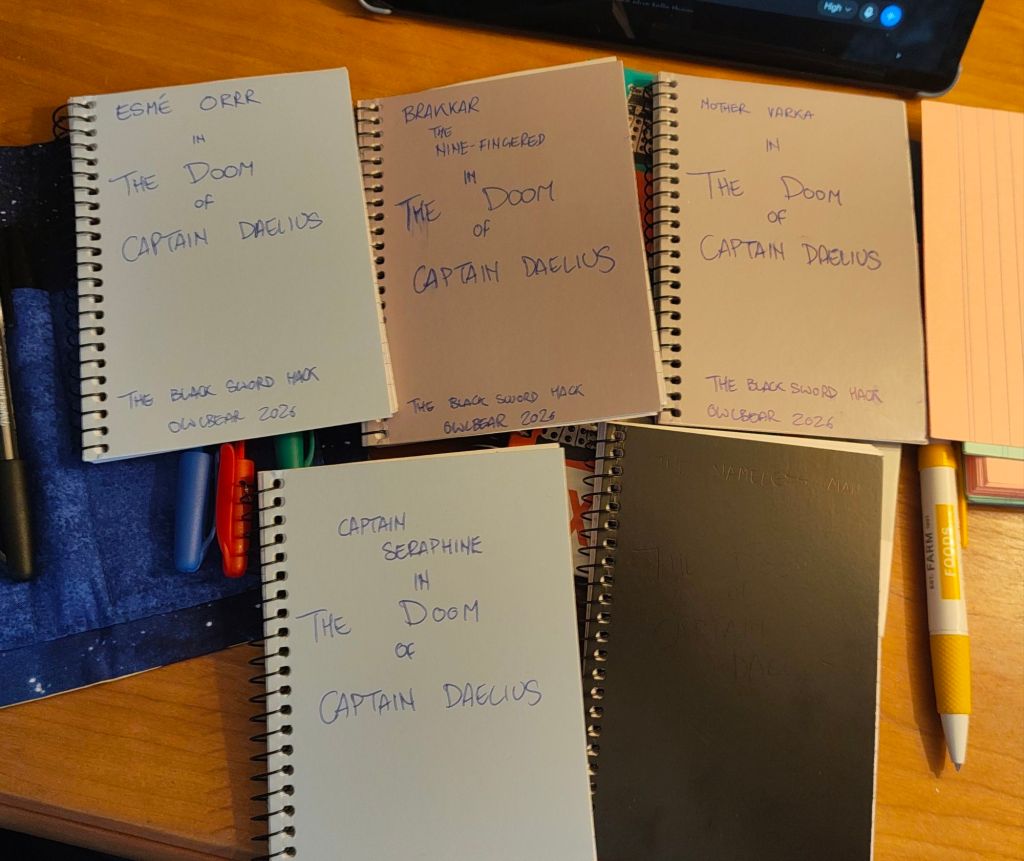

This past weekend we had the pleasure of journeying down to Leamington Spa for our second trip to the long-running RPG con, The Owlbear and the Wizard’s Staff. Created and facilitated by Matthew Broome, Owlbear has been going quite a few years now, but has only recently established itself as a must-attend fixture in our gaming calendar, largely due to Phil committing to RPG cons a couple of years ago (and you can hear us talking about that elsewhere).
This year I had the pleasure of playing in three games facilitated by excellent, seasoned GMs:
- Swashing my buckle in a musketeer game c/o Sam Vail
- Saving hops and burning to death in Blythy’s Dolmenwood scenario
- Getting super paranoid whilst trying to figure out who I and my fellow players might be whilst trying to avert the birth of the Destroyer of Worlds into our reality, thanks to Sue
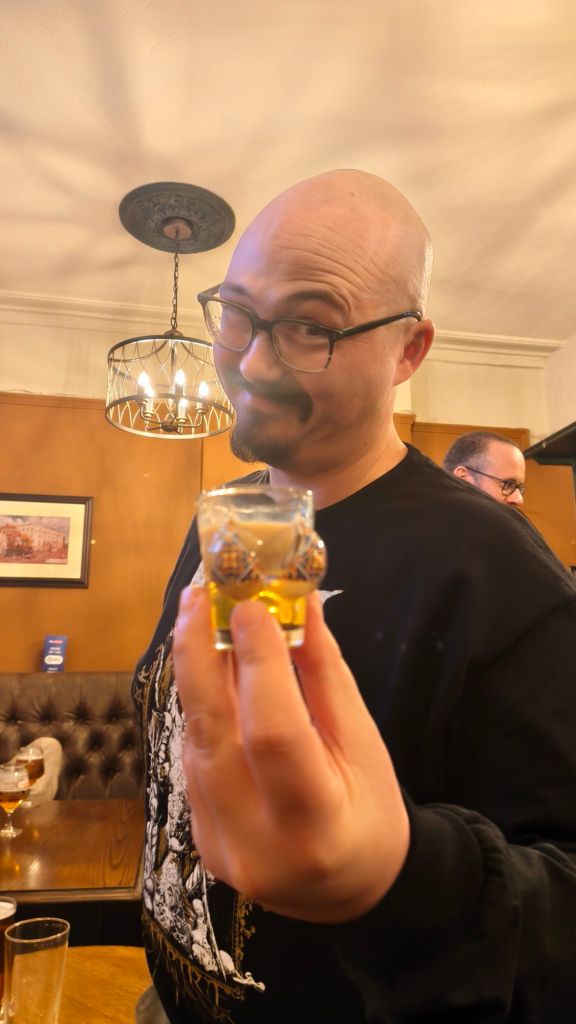
All fab times (despite accusations of resting bitch face), punctuated by multiple sessions in The Woodland Tavern where, for reasons i can neither explain not entirely remember, I was awarded… the Booby Glass!
There was still Sunday to come, though, and after popping my con GM cherry at Rolling in the Ruins back in June, I thought I’d throw my floppy, shapeless hat into the ring here too.
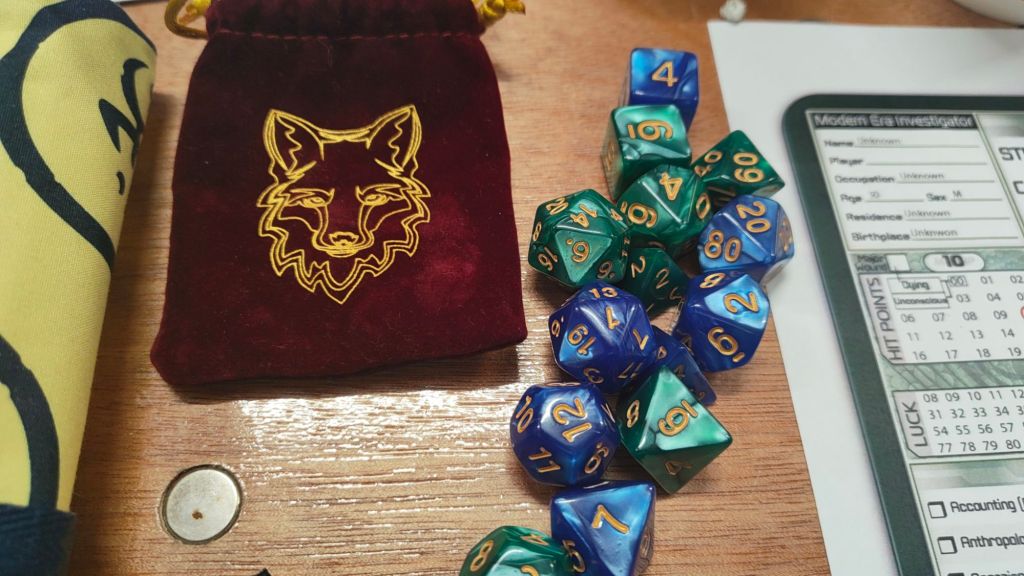
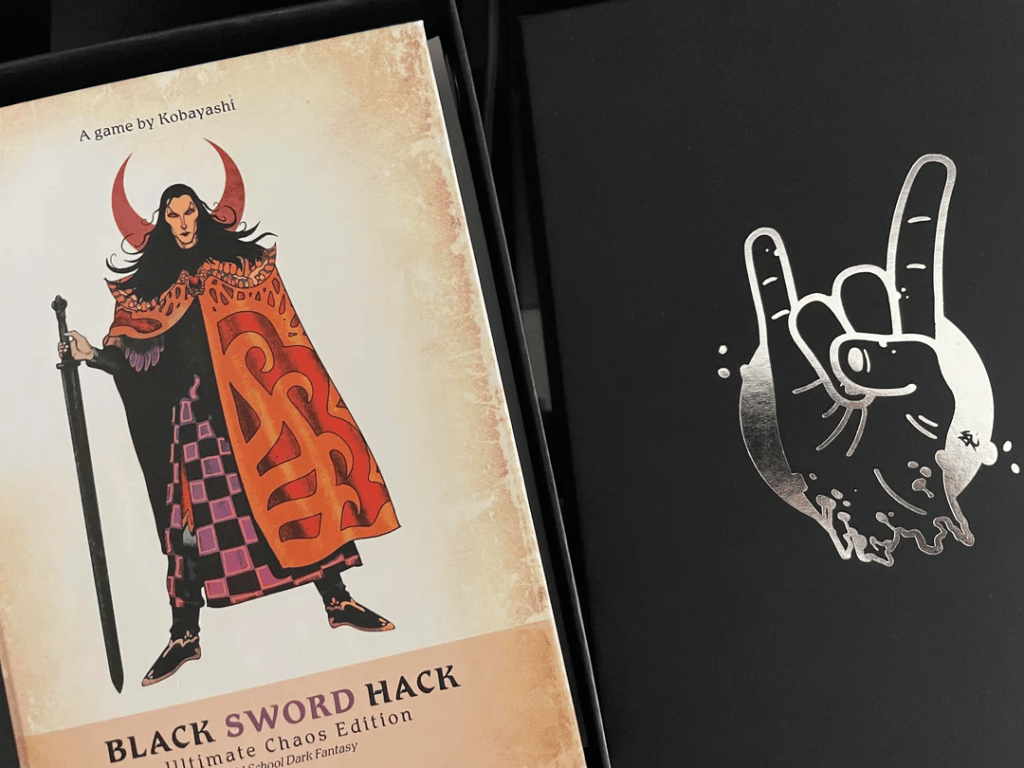
The Doom of Captain Daelius was designed as a three-and-a-half-hour convention scenario for Black Sword Hack: Ultimate Chaos Edition, Kobyashi’s Moorcockian descendant of the wonderfully lean OSR ruleset The Black Hack by David Black. If you know old-school RPGs but not BSH, the important bit is that every character carries a dwindling Doom die which can be spent to force fate in their favour, at the risk of eventually becoming properly Doomed. Thematically, a la Moorcock, the game treats Law and Chaos as cosmic tendencies rather than good and evil. That suited what I wanted perfectly. An adventure in which the villain has not gone mad so much as reached a perfectly coherent conclusion which happens to be appalling, but recognisably reasonable rather than moustache-twirlingly evil.
As it happens, I decided to run BSH:UCE before realising that I had no idea where my copy was. I never did find it (I hope I do, it seems rather hard to find these days and the PDF doesn’t seem to be on the usual RPG retail site). Nor did I find my original copy of the first The Black Sword Hack. Fortunately, I did have the PDF and the SRD is available online so I was able to throw a rules primer together.
My setting may be familiar to some listeners to the podcast (a fairly shameless multiversal collision of Moorcock, Time Bandits, Iain M. Banks and whatever else happens to be lying around Mrs House’s kitchen when I’m throwing it together). It’s the setting and backdrop to The Journal of Gerard Arthur Connelly, Connelly being my old character from various Loz-helmed games of the past 30 or more years, but whom for the last decade or so has been limited to the very occasional minor cameo in my games.
Independent Captains cross between unstable worlds aboard ornately decorated wooden vardos carried on the backs of huge psychic slugs (Mnemovores). Their loose association, the Captain’s Moot, sent Captain Daelius to recover an ancient device called the Astrolabe, but he never returned. Instead, fragments of an incomprehensible map began appearing alongside devotees of the Singularity and its avatar, the Original Insect. Believers in “Correction”, the progressive elimination of difference, contradiction and ultimately choice itself. So the Moot dispatches the crew of Wednesday’s Widow, borne by the venerable Mnemovore Tuesday, to find Daelius.
The PCs were:
- Captain Seraphine (Cath) – esteemed member of the Moot
- Brakkar (Jem) – barbarian slug-wrangler
- Mother Varka (Sue) – witch and demon-botherer
- Ilyra Quill (Steve) – cartographer of impossible places
- Esmé Orr (Phil) – assassin and escaped former Correctee
- Nameless (Joshua) – a beautifully dressed man whose skin is literally lightless and who has forgotten his own name.
The scenario begins with the crew already following one fragment of Daelius’s map toward the Carnival of Faces, only to be boarded by white-clad cultists trying to recover it. Their defeat reveals clues as to their mission, to retrieve all other fragments, but also information that a mysterious character has been captured at Isenstadt. A man that defies categorisation and may be some kind of multiversal anomaly.
Connelly.
A name that would become vaguely familiar, thanks to some successful memory rolls, from the spine of a colossal book in the meeting room of the Moot back on the Demesne of the Rocks:
The Journal of Gerard Arthur Connelly – Vol XXXVII Chap XXII
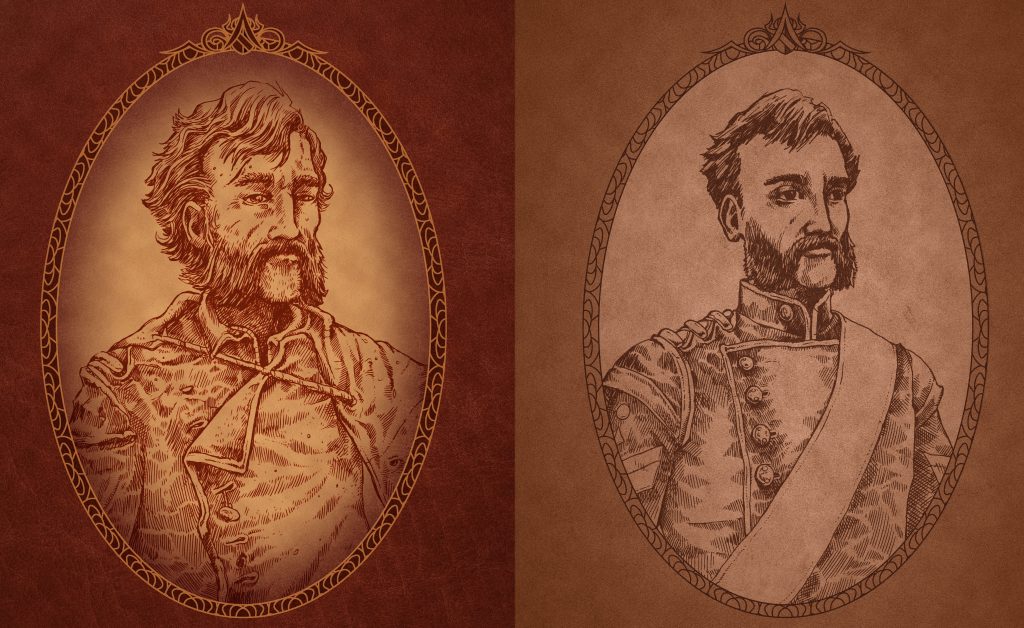
The Carnival turned out to be a lovely mess of personal expression, markets and competing fashions, with Correction parlours creeping in around the edges — some fashionable and expensive, some decidedly backstreet and unhygienic — while the locals largely dismissed the whole business as just another fad. But Daelius had been there and undergone Correction, and to the party’s horror, cut ties with his dismayed Mnemovore, replacing her with a pale worm-like creature with no apparent psychic presence.
Rotter!
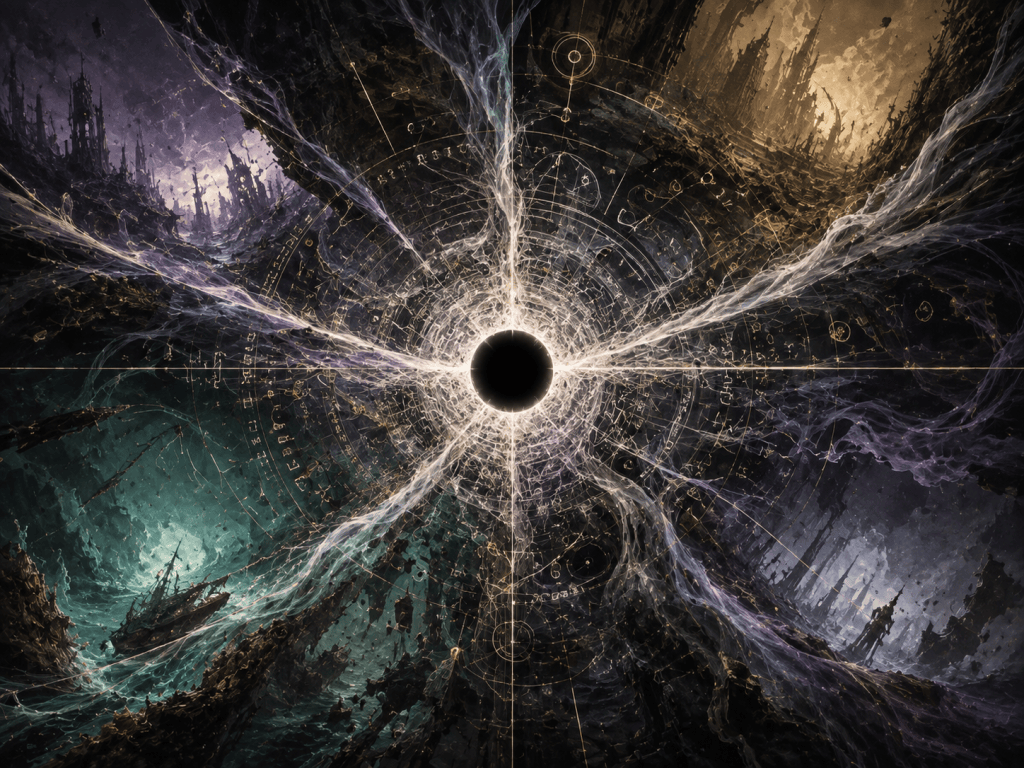
From there the trail led toward Daelius’s abandoned slug, Orpheline, at the Road of Dead Ships, a graveyard of dying Mnemovores whose old memories leaked into the landscape. The party entered Orpheline’s memories, discovered that Daelius had willingly abandoned her following his conversion. To keep things interesting, they fought a swarm of Mnemonids, things that feed by sucking vestigial memories from dead and dying slugs. Killing them caused stolen memories to erupt briefly into reality, so the battle lurched through a series of other people’s lives. Somewhere in the middle of all this, the Nameless Man recovered one of his own lost memories: his name.
As always, the players immediately improved the scenario by injecting their take on the material and their characters (always the real wonder and best reward for an anxious GM). A captured singularity cultist was compelled to answer a question truthfully and revealed that the Astrolabe itself had been taken to Cromanus, the Godferry, (a vast and ancient Mnemovore that is so large it has an entire town on its back where other Captains and their vessels dock for rest, refit and longer journeys) where Gerard Arthur Connelly (that old Breakfast in the Ruins multiversal nuisance) was being held captive and interrogated because the device could not resolve which version of him was actually real.
Wonderfully, the party saved Orpheline rather than leaving her to die, boarded and captured a Singularity vardo en route, and discovered that its white worm steed was not a psychic partner at all but was navigated by pain impulses fed into a calculating machine. On reaching Cromanus they found Daelius’s own vardo, Nothing Personal, sent it off toward Isenstadt on autopilot as a distraction, and Brakkar roused a posse of Captains and assorted barbarians from his favorite drinking hole, The Dainty Cupcake, to go and have words with the local Singularity contingent bully boys that had been increasingly menacing the populace and had taken possession of the Cartographers’ Exchange.
The finale took place in the Exchange. The crew reached Connelly, had a mildly bewildering conversation with him, and then Daelius arrived. What followed was less a boss monologue than a furious political argument between Daelius and Brakkar about free thought, authority, suffering and imposed order — somewhere between Michael Moorcock philosophy and an especially bad-tempered episode of Question Time.
When the formerly Nameless Man put a heavy pistol to GAC’s head, Daelius finally cracked, revealing just how important Connelly had become to his plans. Brakkar went berserk; Quill cast Hold Fast on Daelius’s boots and rooted him to the floor, Varka produced an explosively successful cloud of hallucinogenic herbs before invoking a demon to set Daelius on fire, Esmé peppered the now puking and green-haired goons with crossbow bolts, and the man formerly without a name put a bullet in Daeilus’s shoulder. Seraphine topped and tailed everything. Convinced that her earlier rejection of Daelius might have played some part in his descent, she slipped behind him, whispered her disappointment into his ear, and cut his throat.
Connelly had the last words.
“Ah,” he said. “I remember now. I wrote this months ago.”
This might seem self-indulgent, but it felt more fitting than, “Well done, the baddie is dead and it’s 1.30pm. We’re done.” So, there we concluded, bang on time, precisely three and a half hours after we began.
The chief consequence of prepping and stressing over a game inevitably panned out, in that a significant proportion of the the scenario as prepared never happened. That, in my experience, is almost always a boon. Isenstadt itself remained untouched, while its themes and clues were cannibalized on the fly and inserted into the improvised scene with the captured Singularity vessel. Orpheline lived, Daelius died and in Isenstadt the murdered Captain has already become a martyr. The heroes of one adventure are about to discover what it feels like to become somebody else’s historical villains.
Or they would, had this had the opportunity to continue in a campaign format. This is the bittersweet pill, of course. I love playing at cons. As the forever GM for our home group, I rarely get to play, so cons give me that sweet sweet experience (and shout outs once again to Sam, Blythy and Sue for fab games over the weekend) of playing and immersing yourself in someone else’s shared, facilitated sandbox. Getting to GM for a group at one of these events feels like an honour too. I think most of my players got what I was going for, but I do have to acknowledge that my approach to GMing (more narrative than system-driven) may not be everyone’s jam, and that might have caused a bit of exasperation at times. I think it largely worked, but I’d not dipped my toe into this type of experience until June this year at our own mini-con, Rolling in the Ruins.
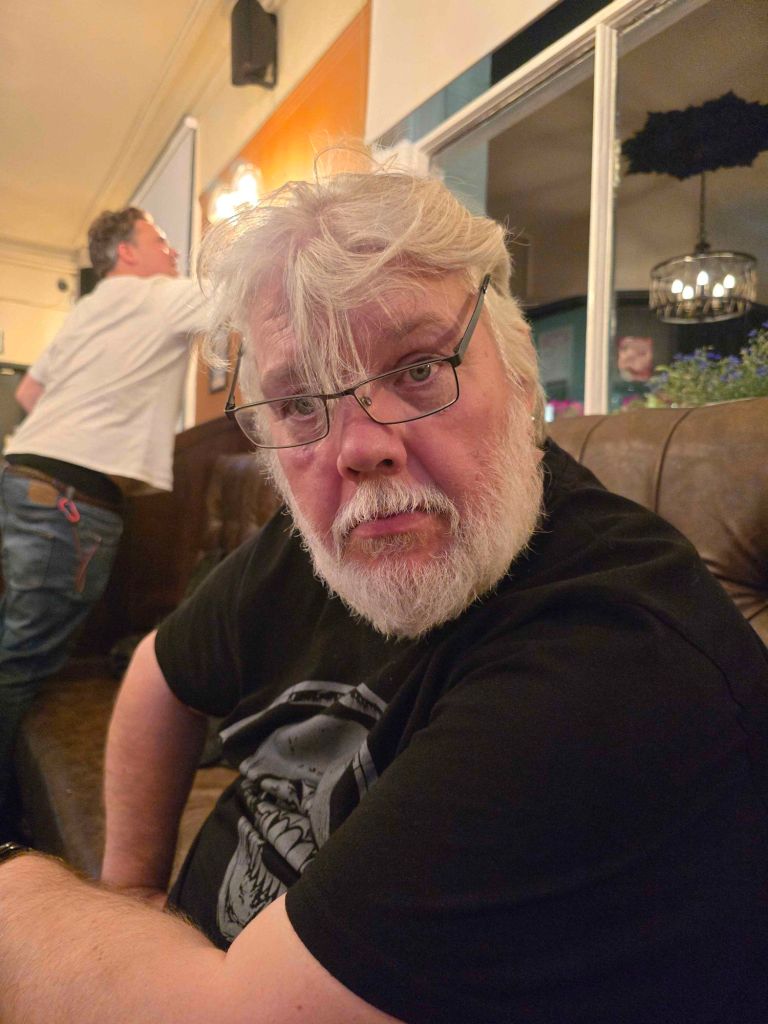
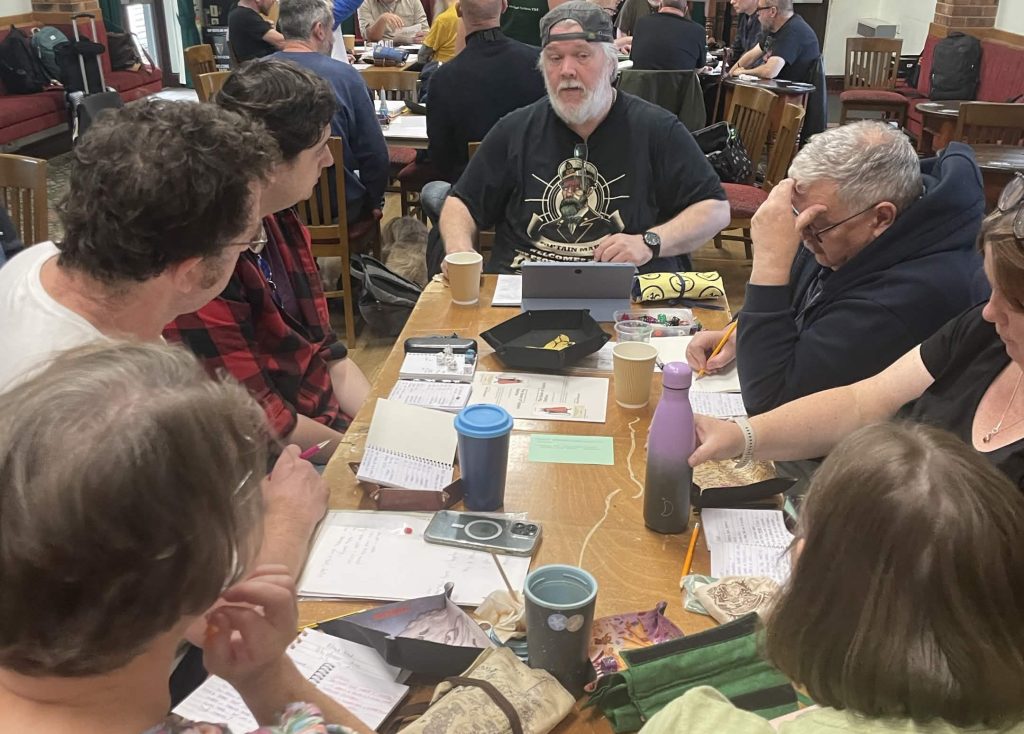
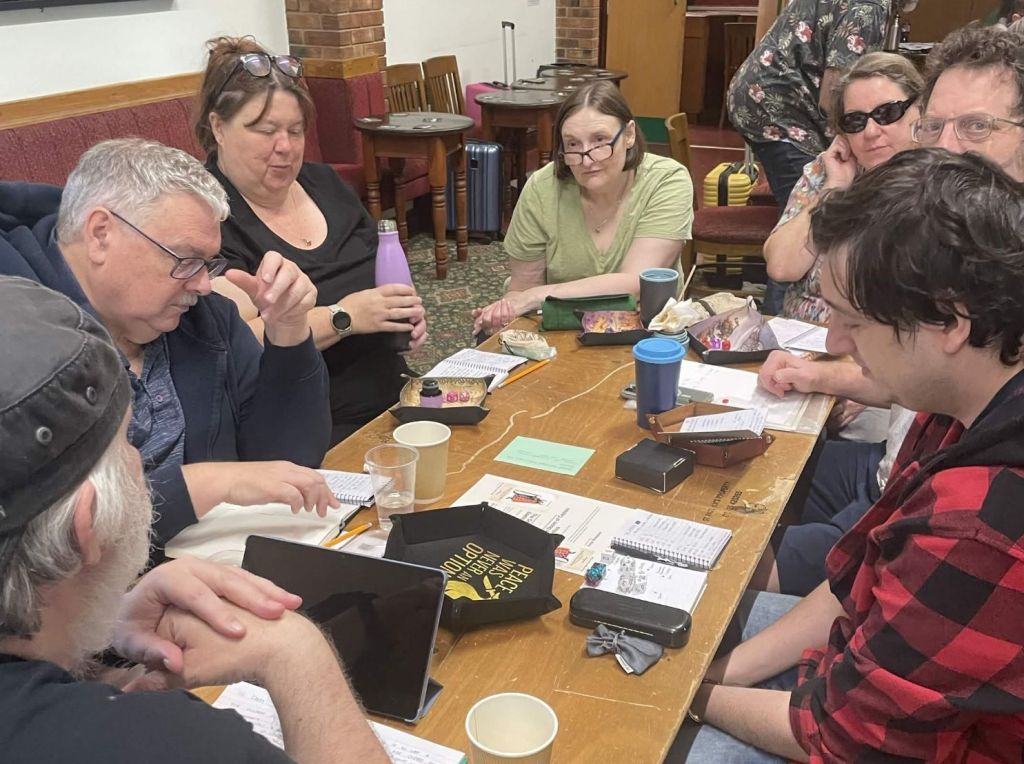
There’s a balance to be struck between wanting to demonstrate what you think is great as a GM and understanding that we don’t all game in the same way, so you have to try to cater for that, but ATEOTD you can’t please everyone and you can’t overly compromise what brings you joy from the experience. Fortunately, on this occasion, I felt a lot of joy at that table, even if it does look like I was about to keel over and fall asleep in that picture.
It was quite challenging for another reason too. I’m generally terrible at concluding a satisfying scenario in one session. Countless is the number of games over the years we’ve started, enjoyed, but never returned to (although the fact that we game bi-monthly and booze as we do it doesn’t help to maintain continuity). Running two games, one on each date, for the RITR mini-con did help me focus on the essentials, though.
So, to run a game that seemed to go off as planned, and be enhanced further by great players buying into the setting and committing to their bit, was extremely satisfying and gave me that GM high that we all love (well, those of us that dabble). The flipside is the inevitable mental slump from all of the unrealisable potential in where the story and characters could have gone next.
Isenstadt stands, perfected. The Singularity is no longer a cult, but a movement… And it now has Daelius, the Great Martyr to propel it down the straight arrow of Law.
Who will stand against it?
Another group of players, another time, on another moonbeam road perhaps. But it would have been lovely to see where this could have gone next with that group.